Friday, 1 October 2010

Child bride horrors last a lifetime

Sana'a, Yemen (CNN) -- Reem al Numeri is 14-years-old and recently divorced. She was 11 when she says her father forced her to marry a cousin more than twice her age.

Reem says she has been stigmatized by her divorce and now lives the life of an outcast. Without a husband or father to support her, she cannot attend school.

Her story has echoes of Nujood Ali -- the Yemeni girl whose story sparked an international outrage that many thought would force change in the country.

But a bill to outlaw child marriages got blocked and the practice continues. On Saturday, Yemen's parliament will look again at child marriage.

Reem's desperate pleas to stay a child fell on deaf ears as her father forced her to marry a 32-year-old cousin. "He said you need to go into the room where the judge is and tell him you agree to the marriage," Reem said. "I said I won't go in there - he took out his dagger and said he'd cut me in half if I didn't go in there and agree."

For Reem, the terror and the trauma were just beginning. She said she was told to sleep with her husband, but refused. She locked herself in a bedroom every night to ensure her safety but, according to Reem, he managed to sneak in and raped her.

Reem said members of her family first ordered her to submit, then expected her to celebrate. "They chose not to buy me any bridal dresses until they were sure I'd had sex with him because they didn't want their money to go to waste," she said. "Once they were sure, they bought me the bridal clothes and threw me a party. After that, I burned the white bridal dress I was given and then I used a razor to try to kill myself." Reem's father and ex-husband did not return CNN's calls.

In Yemen, a deeply tribal society, the issue of child marriages is a complicated one.

Two years ago, 10-year-old Nujood Ali shocked the world when she took herself to court in Yemen's capital city of Sana'a and asked a judge for a divorce.

After a well publicized trial, she was granted one -- and became a heroine to those trying to shine a spotlight on the issue of child brides in Yemen, where more than half of all young girls are married before age 18, mostly to older men.

In 2009, Yemen's parliament passed legislation raising the minimum age of marriage to 17. But conservative parliamentarians argued the bill violated Sharia, or Islamic law, which does not stipulate a minimum age of marriage.

And because of a parliamentary maneuver the bill was never signed into law.

More than 100 leading religious clerics called the attempt to restrict the age of marriage "un-Islamic".

Mohammed Aboulahoum, who advises Yemen's president, said the law should be passed, but he added the fight against child marriage restrictions were a distraction -- a way for the parliament to avoid bigger, more sensitive, political issues.

"I think there should be an age limit," Aboulahoum said. "And if you sit even with the religious people and you ask them, would you let your daughter marry at the age of 12 or 13, they would tell you no. So it is something, we use it more for politics."

Reem's attorney, Shada Nasser, is one of Yemen's most well known advocates for children's rights.

Nasser has represented several child brides seeking divorce, including Ali. She doesn't even think the practice should be called marriage. "I think it is rape," she said.

But Nasser also has hope that Reem's generation will help build a new Yemen, free of child marriages.

"Who can build this Yemen?" asked Nasser. "Me? No - all these small girls -- they must build Yemen. But all these girls need a good law - a family law." Nasser begs the clerics standing in the way: "I ask them to give these girls mercy."

A prominent Yemeni human rights activist, Amal Albasha, is also outraged the practice continues. Her organization, Sisters Arab Forum, tries to intervene on behalf of child brides, to stop the marriages from taking place. Albasha added that nothing will change until people in Yemen try to fully understand the horror a child bride goes through.

"You know, just two days ago, a 9-year-old girl got married in Taiz." she said. "Just think about the pain, the fear -- just think about a 9-year-old with a 50-year-old in a closed room," said Albasha. "The experience remains until the day of death."

http://edition.cnn.com/2010/WORLD/meast/10/01/yemen.child.brides/index.html?h...

Posted via email from projectbrainsaver

ALL THINGS FOE

photo of the actual filming site... (click to enlarge)

On Saturday, 10th October, we decided to walk up to Fox Point to look at the set. The weather was great when we had left home and was still dry as we walked up the hill. Due to filming we had to wait for a while and once the all terrain vehicles started to move we were able to continue towards the set.

We met a really friendly guy near to the set and we spoke to him for sometime – he was telling us about how they were in Hungary for 6 weeks and how things were going here etc and told us to go and look into the huts, wander around the “village”etc and not to worry that if we were in the way, we would be asked to move. Having introduced himself as Duncan, asking our names as well, I asked if he would be going to the ceilidh at night. He was and we met him there and he spoke to us by name which I thought was really good. Only later did I find out that he was infact Duncan Kenworthy, the producer.

The set was so impressive – however getting across the boggy tracks was not at all easy, especially as I am a bog magnet and usually end up falling in them. We had seen some photos of the huts and were totally amazed at how realistic the fibre glass stones were – an amazing amount of work must have gone into it and the colours were incredible!

The costumes for the extras are fantastic and it was great fun looking beyond the green paint to see who we recognised!

As the weather was so bad by now – rain, rain and more rain we weren’t sure if we would just head back down the hill but noticed they were filming at ground level. 2 of the extras were walking past the black horse and the camera man was filming their legs through the horses legs! The man actually turned out to be a friend of Stuart’s and his nickname is Budgie.

The next bit to be filmed was Channing scraping a sealskin outside a hut so bark chippings had to be laid and covered with bracken as the ground was so wet. Then with everything about ready and Channing called the weather changed so they decided to do a close up of Channing with the horses.

By now we were well and truly soaked so headed off back down the hill. We had spoked to quite a few people involved in the filming and they were all really courteous and looking forward to the ceilidh.

We never saw Jamie (Bell) so not sure if he was there or not.

The Ceilidh:

The ceilidh was by far one of the best we have ever had in our community hall. Despite having taken 2 hours to get off the hill a great number of people came along – including some extras who were staying in Ullapool and had never been to a ceilidh before. Jamie, Channing and his wife all came along and appeared to be really enjoying themselves.

The music for the evening was varied but brilliant. So many of the kids were involved – guitars, bagipes, accordians and whistles. The Coigach singers did a few songs, lot of piping and a tremendous amount of dancing. It was great as we had our very own “Dancing with the Stars”.


The lady who is the vocal coach sang Robert Burns Aye Fond Kiss and it was so beautifully sung and the audience joined in with her.

At the end of the night we finished in true highland style with Auld Lang Syne and I hope that the memory and atmosphere of the night stays with everyone for a long time


(First posted here on October 13, 2009 as reported by Julie...)

(-:

Posted via email from projectbrainsaver

BBC News - Change to 'Bios' will make for PCs that boot in seconds

1 October 2010 Last updated at 05:11 ET

Share this page

Change to 'Bios' will make for PCs that boot in seconds

By Mark Ward Technology correspondent, BBC News
Computer motherboard, Eyewire The Bios in modern computers dates from the earliest IBM PCs

New PCs could start in just seconds, thanks to an update to one of the oldest parts of desktop computers.

The upgrade will spell the end for the 25-year-old PC start-up software known as Bios that initialises a machine so its operating system can get going.

The code was not intended to live nearly this long, and adapting it to modern PCs is one reason they take as long as they do to warm up.

Bios' replacement, known as UEFI, will predominate in new PCs by 2011.

The acronym stands for Unified Extensible Firmware Interface and is designed to be more flexible than its venerable predecessor.

"Conventional Bios is up there with some of the physical pieces of the chip set that have been kicking around the PC since 1979," said Mark Doran, head of the UEFI Forum, which is overseeing development of the technology.

Mr Doran said the creators of the original Bios only expected it to have a lifetime of about 250,000 machines - a figure that has long been surpassed.

"They are as amazed as anyone else that now it is still alive and well in a lot of systems," he said. "It was never really designed to be extensible over time."

AMI is a firm that develops Bios software. Brian Richardson, of AMI's technical marketing team, said the age of the Bios was starting to hamper development as 64-bit computing became more common and machines mutated beyond basic desktops and laptops.

Floppy disk, Eyewire The Bios tells the computer what input and output devices are installed

"Drive size limits that were inherent to the original PC design - two terabytes - are going to become an issue pretty soon for those that use their PC a lot for pictures and video," he said.

Similarly, he said, as tablet computers and other smaller devices become more popular, having to get them working with a PC control system was going to cause problems.

The problem emerges, he said, because Bios expects the machine it is getting going to have the same basic internal set-up as the first PCs.

As a result, adding extra peripherals - such as keyboards that connect via USB rather than the AT or PS/2 ports of yesteryear - has been technically far from straightforward.

Similarly, the Bios forces USB drives to be identified to a PC as either a hard drive or a floppy drive.

This, said Mr Richardson, could cause problems when those thumb drives are used to get a system working while installing or re-installing an operating system.

UEFI frees any computer from being based around the blueprint and specifications of the original PCs. For instance, it does not specify that a keyboard will only connect via a specific port.

"All it says is that somewhere in the machine there's a device that can produce keyboard-type information," said Mr Doran.

Under UEFI, it will be much easier for that input to come a soft keyboard, gestures on a touchscreen or any future input device.

Rack of computers, Think Stock UEFI is proving a boon to those managing lots of computers in data centres

"The extensible part of the name is important because we are going to have to live with this for a long time," said Mr Doran.

He added that UEFI started life as an Intel-only specification known as EFI. It morphed into a general standard when the need to replace Bios industry-wide became more widely recognised.

The first to see the benefits of swapping old-fashioned Bios for UEFI have been system administrators who have to oversee hundreds or thousands of PCs in data centres or in offices around the world.

Before now, said Mr Doran, getting those machines working has been "pretty painful" because of the limited capabilities of Bios.

By contrast, he said, UEFI has much better support for basic net protocols - which should mean that remote management is easier from the "bare metal" upwards.

For consumers, said Mr Doran, the biggest obvious benefit of a machine running UEFI will be the speed with which it starts up.

"At the moment it can be 25-30 seconds of boot time before you see the first bit of OS sign-on," he said. "With UEFI we're getting it under a handful of seconds."

"In terms of boot speed, we're not at instant-on yet but it is already a lot better than conventional Bios can manage," he said "and we're getting closer to that every day."

Some PC and laptop makers are already using UEFI as are many firms that make embedded computers. More, said Mr Richardson, will result as motherboard makers complete the shift to using it.

He said that 2011 would be the year that sales of UEFI machines start to dominate.

"I would say we are at the edge of the tipping point right now," he said.

Posted via email from projectbrainsaver

BBC News - Seasonal check-up for Hafod Eryri on Snowdon

1 October 2010 Last updated at 11:15 ET

Seasonal check-up for Hafod Eryri on Snowdon

Hafod Eryri (picture: Peter Macmillen) Hafod Eryri will be boarded up for winter at the end of October

Scaffolding has been erected so that builders can check the condition of the visitor centre on top of Snowdon.

Hafod Eryri will be shut down, until next spring, at the end of this month.

The 1085m (3560 ft) peak suffers extremes of weather, and last year, due to heavy snow, the railway company struggled to re-open it in May.

The £8.4m Hafod Eryri building opened in June last last year, and 6,000 tickets for the Snowdon railway were sold in the first month.

A spokesperson for the Snowdonia National Park Authority said visitor figures for this year had yet to be finalised, but thousands visited the summit during the spring and summer.

"Any building situated at such a unique location as this has to be closely monitored, looked after and prepared for winter weather," said Pete Trumper, the national park's property manager.

The park's contractor Carillion is checking the building to secure any loose stonework.

"As the season draws to a close, the contractors are taking the opportunity to complete essential work before the shut-down," Mr Trumper said.

"This in turn will ensure that the building will be properly prepared for a harsh winter and will have an effortless opening next year," he added.

Posted via email from projectbrainsaver

BBC - Hollywood glamour in Retreat at Gwynedd manor house

Montage of (from left) Cillian Murphy, Thandie Newton and Jamie Bell. All copyright Getty Images.
The Retreat is directed by Karl Tibbetts and due for release in December 2011

Three Hollywood stars have descended on a Gwynedd village as filming gets under way for a new psychological thriller.

The Retreat will star Billy Elliot's Jamie Bell, Cillian Murphy of the smash hit Inception and Thandie Newton of Mission Impossible II and Crash.

They will be spending most of their time at Plas Llandecwyn, a remote farmhouse near Talsarnau, Harlech, which will double up as a secluded island hideaway.

In the film Murphy and Newton play a married couple who are spending some time alone to repair their relationship.

But they're soon confronted by a bio-hazard suited soldier (Jamie Bell) who says a fatal airborne disease has swept the planet and they're the only people left alive.

Plas Llandecwyn - photographed by David Medcalf for Geographic.org.uk
The old manor house is doubling up as a remote island tretreat

The producers are calling The Retreat "a landlocked Knife in the Water meets Dead Calm", as the couple try to discover whether the soldier is telling the truth.

The production team arrived in Talsarnau two weeks ago and are due to stay until 15 October.

The actors and crew had wanted to stay at nearby Portmeirion, but site manager Meurig Jones had to reluctantly turn them down.

"They came to see us in June and wanted to take up quite a few rooms, but we're booked up in advance," said Meurig, who's nevertheless been keeping an eye as events unfold.

"They're at Plas Llandecwyn, an old manor house up near Llyn Isa. There's been a huge marquee up there for quite a few weeks now. I don't live far from there, and there's definitely been a lot of traffic going up to the house."

Meurig is delighted to have such high profile actors in the area.

"I'm looking forward to seeing the film," he said. "Anything like this is good for Wales, because people will see it and might want to come here on their holidays.

Director

"It's great to see that these things are happening and I hope it will continue."

The production team are believed to be staying at Barcdy Caravan Park, Talsarnau, but are currently releasing no further details of their schedule.

The Retreat is a debut for British director Karl Tibbetts and is a co-production between Irish film-makers, Ripple World Pictures, and British company Magnet Films.

It's due for release in December 2011 and is the latest in a long line of film and TV productions to use north Wales locations.

The Clash of the Titans remake was filmed at Dinorwig Quarry, Llanberis, last year, and actor and singer Will Young was at Bangor University in early September filming Bedlam, a six-part TV drama.

E-mail this to a friend

Printable version

Posted via email from projectbrainsaver

BSE Testing in Alberta is Increasing

Testing for bovine spongiform encephalopathy (BSE), or “mad cow disease,” in Alberta increased 45 per cent during the 2010 calving season compared to the same period of last year.
.
This increase resulted from the elimination of some of the restrictions in eligibility criteria, as well as to the effort of veterinarians and government officials to promote the program in Alberta. This is great news as Alberta producers need to continue testing cattle through the BSE surveillance program.

Testing for BSE in the Province of Alberta is a shared commitment between the Canadian Food Inspection Agency and Alberta Agriculture and Rural Development, through the Canada and Alberta BSE Surveillance Program. A network of approximately 300 private veterinarians is readily available in the province to respond to producers’ calls on potentially eligible animals, to examine those animals and to collect samples when eligible.

It is very important to test enough of the right type of samples for BSE to demonstrate to the international community that BSE is present at very low levels and is decreasing in Canadian cattle, and to demonstrate that control measures are working. This is essential for maintaining Canada’s status as a “controlled risk” country for BSE, as recognized by the World Organization for Animal Health (OIE). This status is critical to maintaining, regaining and expanding market access for beef and beef products, bovine genetics and cattle in general. The cattle industry will benefit from a growing domestic and international demand.

Producers are encouraged to call a veterinarian if they have animals aged 30-to-107 months that are diseased, distressed, non-ambulatory or recently dead, or older animals with neurological signs. Producers must have possession of the animals for at least 30 days, in order to provide enough clinical history. The Canada and Alberta BSE Surveillance Program continues to reimburse $225 for eligible samples. Producers don’t have to pay veterinarians for visiting their farms to asses an animal for BSE eligibility.

Contact:
Canada and Alberta BSE Surveillance Program
780-644-2148

Posted via email from projectbrainsaver

California Governor Signs Marijuana Decriminalization Bill

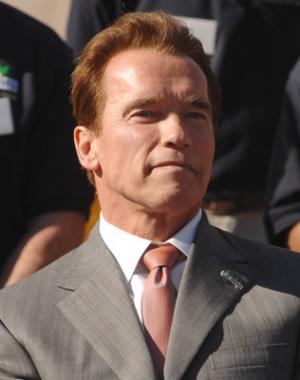
California Gov. Arnold Schwarzenegger (R) Thursday signed into law a bill that decriminalizes the possession of up to one ounce of marijuana. The bill reduces simple possession from a misdemeanor to an infraction.

Currently, small-time pot possession is "semi-decriminalized" in California. There is no possible jail sentence and a maximum $100 fine. But because possession is a misdemeanor, people caught with pot are "arrested," even if that means only they are served a notice to appear, and they must appear before a court.

That has happened to more than a half million Californians in the last decade, and more than 60,000 last year alone. Every one of them required a court appearance, complete with judge and prosecutor. That costs the cash-strapped state money it desperately needs.

Under the bill signed today, SB 1449, by Sen. Mark Leno (D-San Francisco), pot possession will be treated like a traffic ticket. The fine will remain at $100, and there will be no arrest record.

In a signing statement, Schwarzenegger said he opposed decriminalization for personal use—and threw in a gratuitous jab at Proposition 19, the tax and regulate marijuana legalization initiative—but that the state couldn't afford the status quo.

"I am signing this measure because possession of less than an ounce of marijuana is an infraction in everything but name," said Schwarzenegger. "The only difference is that because it is a misdemeanor, a criminal defendant is entitled to a jury trial and a defense attorney. In this time of drastic budget cuts, prosecutors, defense attorneys, law enforcement, and the courts cannot afford to expend limited resources prosecuting a crime that carries the same punishment as a traffic ticket."

"Gov. Schwarzenegger deserves credit for sparing the state's taxpayers the cost of prosecuting minor pot offenders," said California NORML director Dale Gieringer. "Californians increasingly recognize that the war on marijuana is a waste of law enforcement resources."

The law goes into effect January 1. Even if Prop 19 passes in November, it leaves in place misdemeanor charges for smoking in public or in the presence of minors. Those misdemeanors would become infractions under the new law.

Posted via email from projectbrainsaver

BBC News - Government to scrap M4 bus lane

1 October 2010 Last updated at 05:08 ET

Share this page

Government to scrap M4 bus lane

The M4 The bus lane was known as the "Blair lane" after the former prime minister used it to avoid heavy traffic

The controversial M4 bus lane is due to be scrapped at the end of the year.

Under the plans, all motorists will be able to use the 3.5 mile (5.6km) lane which operates on the London-bound carriageway from near Heathrow.

Transport Secretary Philip Hammond is expected to announce the move at next week's Conservative Party conference.

The lane will be suspended from 24 December for 18 months when it will be brought back into use for the Olympics, after which it will be scrapped.

The unpopular bus lane was introduced by former Transport Secretary John Prescott in 1999.

It became known as the "Blair lane" after the former prime minister used it to avoid heavy traffic.

In his speech to the Conservative Party, Mr Hammond is expected to say: "Nothing is more symbolic of Labour's war on the motorist than the M4 bus lane."

He is thought to reveal plans to suspend the lane from the end of December until the 2012 Olympics, and then scrap it permanently after the Games.

Mr Hammond will say that the lane will be temporarily used for the Olympics to help get people "speedily" to and from events.

Posted via email from projectbrainsaver

BBC News - Npower gas customers to get a £70m refund

1 October 2010 Last updated at 04:58 ET

Share this page

Npower gas customers to get a £70m refund

Npower statements and hob The refunds will range from £1 to £100, with an average refund of £35

Nearly two million homes overcharged for gas are to be refunded, in one of the biggest pay-outs of its kind.

Energy company Npower has agreed to hand back £70m following a long-running row over changes it made to the way it charged customers in 2007.

The firm admits it had not communicated the changes well, and £1.8m people are to receive an average refund of £35.

Npower says it will write to all those affected over the next two months, even if they are no longer customers.

In 2007, the company started charging households a fixed monthly number of more expensive initial gas units - known as primary block units. Previously the amount of primary units charged varied according to the time of year.

At the same time, Npower lowered prices and introduced some discounts. As a result, some low-use customers were billed for more than the usual number of primary units, leaving them out of pocket.

'Caused confusion'

The company has always insisted most households benefited from the changes, but following an investigation by the industry regulator Ofgem, Npower initially agreed to repay 200,000 customers an average of £6 each.

Continue reading the main story

“Start Quote

Although the vast majority of our customers benefited from the combined effect of the changes, some, who were low users of gas, did not”

End Quote Npower

Watchdog Consumer Focus continued to campaign and some customers started legal action.

Npower conducted a review of everyone who was a gas customer at the time and it has now agreed to make a much bigger payment to 1.8 million people.

The refunds will range from £1 to £100, with an average refund of £35.

The refund is expected to draw a line under a row which had simmered for more than three years.

Richard Frost, of Npower, admitted that the company was slow to get started with refunds.

In a statement, Npower said: "Although the vast majority of our customers benefited from the combined effect of the changes, some, who were low users of gas, did not.

"We are sorry that the complexity of the changes we made caused confusion. We are now doing all we can to improve our communication with customers."

Continue reading the main story

Key points

  • Those eligible will receive a letter which they can cash at a Post Office
  • Npower should contact customers even if they have moved home
  • All letters should be received by November
  • Those who have received the £6 refund will also be in line for the new refund

Npower, which has 6.5 million customers in the UK, will be writing to those affected and offering payments that can be cashed at the Post Office.

Head of Consumer Focus Mike O'Connor said it was an "excellent outcome" and showed a "major commitment from Npower to its customers".

"Consumer Focus has worked closely with Npower to ensure that refunds are made fairly and that no customer loses out," he said.

"A huge amount of work and collaboration has resulted in the right thing being done by Npower for its customers and we welcome this.

"It has been an great example of how consumer organisations can work with industry to deliver a fair deal for consumers."

Claiming the money

Those eligible for the payments - who were gas customers - will receive a letter from Npower which they can then take to the Post Office to cash in.

For those who have moved home, Npower will confirm the new address before sending the letter. All letters should be received by the end of November.

The amount of the payment people are entitled to will vary by tariff, gas consumption, and when they became an npower customer - but the average will be £35.

Those who previously received a refund of £6 will have that amount deducted from the latest refund.

Those not eligible for a refund include: electricity customers, business customers, gas pre-payment meter customers, Gas Guardian tariff customers, 2009 Price Fix tariff customers, Tracker tariff customers, 1st steps customers, Sign Online v8 tariff customers, and those with a debt greater than the compensation due.

Are you an Npower customer? Are you expecting a refund? Send us your comments using the form below:

Posted via email from projectbrainsaver

BBC News - Ecuador unrest: Your stories

30 September 2010 Last updated at 21:50 ET

Share this page

Ecuador unrest: Your stories

Pro-president demonstration in Cuenca at 1600 local time on Thursday. Photo: Chris Breen Pro-president demonstration in Cuenca

Ecuador's President Rafael Correa has been rescued by soldiers after being holed up at a hospital in the capital following a tear gas attack.

Mr Correa left the clinic after soldiers opened fire on the police, following protests by officers angry at benefit cuts.

Here, BBC News website readers explain what has been happening in their area:

Tracey Tokuhama-Espinosa, Quito

Tracey Tokuhama-Espinosa

There is no police presence on the streets and people are staying indoors as they don't feel safe outside. Everyone's problem is that we don't know what is happening at the moment.

The government has taken over all of the media networks and is bombarding the public with propaganda and interviews with people who back President Correa. They are not showing any opposing perspective and making those who protest [against] the president appear evil and irrational.

The other problem is that there is no police presence on the streets and people are staying indoors, as they don't feel safe outside. I have a friend who works for a travel agency. She saw that lots of drug users came out and camped in front of her office. She got scared and decided to lock herself in and spend the night in the office.

Nobody wants the government to fail - the police only wanted to have their voice heard, as they were not happy with the law passed. Nobody has the desire to shut down democracy. This country is a one-man show and people don't feel represented.

Chris Breen, Cuenca

Chris Breen

I am just one block from the centre of the city square where the demonstrations are currently active.

Contrary to the reports coming in on national television from Quito and Guayaquil, Cuenca, the third largest city, is mainly tranquil.

The main square hosted a pro-Correa demonstration in which about 1,000 people were involved. I have heard from locals that people were attacking shop owners and one person died, but apart from that it seems quite stable.

There were many speeches by the local county officials and songs dedicated to the revolution of Che Guevara were sung.

Now there's hardly anyone on the streets. No-one is about. I have a restaurant and bar and usually by now we'd have people in, but there's nobody here.

We lost all access to the internet for about three hours earlier, which was pretty strange.

We don't know what's going to happen next. I personally don't believe it's a coup attempt. I feel it all seems to be exaggerated.

Gustavo Guerrero, Quito

Gustavo Guerrero

I have been around the city for the whole day and Quito is completely calm as people are staying in their homes and seeing events unfold on television.

On the street, the prevalent opinion is that the national police has botched its protests and the government is firmly under control. The city is nowhere close to being a disaster zone, there have been a few crimes committed at banks but people are on the streets not fearing for their life.

It is true that Ecuador has a history of being a very volatile country, but as of this moment the president as well as his allies, political enemies and institutions, most importantly the armed forces, stand firmly behind the government.

It is becoming a political theatre and not a constitutional crisis down here. We have to keep our ears open but let's not jump to conclusions. Events on the ground are not as dire as they appear to be.

Hopefully it stays that way, as most Ecuadoreans are now clamouring for stability and a continuation of this government's policies.

More comments from Ecuador

I honestly do not see a coup. It is just that we do not want to be communist. We don't want to be a Cuba number two. The police and army are right. I think that the president went into the police base to challenge them. Francisco, Quito

We were in Guayaquil and saw the fire in Avenida Las Americas and managed to skirt round the area. We then saw a peaceful protest in Ave Francisco Orellana where the government offices are. We had a first-hand report from a civil servant who said the police came in and forced these offices to close. He sounded very shocked. We also witnessed a man pulled from his car by uniformed men (in combats so police or army) and pushed to the ground. We left at 1315 and found no difficulty in leaving the city and no problems coming to the coast. The local shopping mall was closed very early and the streets are very quiet. Nick Mercer, Puerto Lucia

I was meant to fly from Quito this afternoon, but everywhere is a no-go. There's a real sense of threat everywhere even if there is no outright danger to people walking the streets during daylight hours. While we're seeing non-striking metropolitan police on the streets of Quito, there is a fear of what might happen once it gets dark, and tomorrow. So far, there have been no clashes and we have not seen military force on the streets of Quito - yet. Roland Hughes, Quito

Only in Ecuador can you wake up one morning and everything is in order, and by late afternoon the country is in a state of emergency. In a matter of hours schools closed, businesses shut down and everyone went home or to the streets to protest. The tension is definitely thick in the air. Sasha, Quito

The streets of Quito are more congested than usual, and most businesses are closed. There is also an aura of nervousness. However, staying away from the central areas of protest, the city is not particularly dangerous, nor exciting. Peter Koziol, Quito

The whole town is closed. Transport is down, shopping centres shut and schools closed until further notice. There is a lot of emphasis here on staying indoors and little idea on how the events will turn out. Ben Butcher, Quito

Posted via email from projectbrainsaver

BBC News - Chile miners: Supplying the miners

BBC News - 'No pardon' for Ecuador rebels, says President Correa

1 October 2010 Last updated at 05:22 ET

Share this page

'No pardon' for Ecuador rebels, says President Correa

Soldier taking aim

Please turn on JavaScript. Media requires JavaScript to play.

Soldiers opened fire on police to rescue President Correa

Ecuador's President Rafael Correa has said there will be "no pardon or forgiveness" for those involved in an uprising against him.

Mr Correa had to be rescued by the army from a hospital in the capital, Quito, after he was trapped there for several hours by disaffected police.

The president was being treated after inhaling tear gas fired by police who were protesting at austerity measures.

Two people died and dozens were injured in the unrest, officials said.

The president and his supporters said the police revolt over a new law cutting benefits for public servants amounted to an attempted coup.

A state of emergency has been declared.

Mr Correa said there were be "a deep cleansing of the national police", and that he would "not forgive nor forget" what had happened.

The commander of Ecuador's police force has since resigned, a police spokesman said on Friday.

South American heads of state held an emergency meeting in Argentina and called for those behind the revolt to be tried and punished.

Continue reading the main story

Analysis

Will Grant BBC News

The sight of two key state institutions, the national police force and the military, exchanging gunfire will be one which worries many ordinary Ecuadorians, and reminds them of the past.

Ecuador's history is peppered with violent street uprisings which often ended with the removal of the head of state. In this instance, there was to be no such outcome, but it was a sign of how polarised life in Ecuador has become in recent years, with Mr Correa dividing opinion across the country.

The initial reason for the protests -austerity measures - was almost lost among the high drama of the presidential siege. But that, and other issues such as an impending decision on whether to dissolve parliament and call an early general election, are facing Mr Correa when he recovers from what was, without doubt, his toughest day since taking office.

Mr Correa, a 47-year-old US-trained economist, took power in 2007 and was elected for a second term in 2009, despite a decision to default on $3.2bn of global bonds, which caused widespread fiscal problems for the government.

'Kill the president'

Mr Correa had to be rescued after the hospital he had been taken to was surrounded by rebel policemen.

Mr Correa was smuggled out of the hospital under cover of darkness as a gun battle raged between troops and the rebels.

He said he had told his captors he would "come out as the president of a worthy country or... as a corpse".

Speaking to his supporters outside the presidential palace later, Mr Correa said he hoped the events of the day would serve "as an example to those who want to bring a change and stop the citizens' revolution without going through the polls".

"I give so much thanks to those heroes who accompanied me through this hard journey," the Reuters news agency reported him saying.

Continue reading the main story

Ecuador's political instability

Map
  • 2005: President Lucio Gutierrez deposed after two years, following massive protests in response to his attempt to overhaul the Supreme Court
  • 2000: Jamil Mahuad, elected 1998, forced to step down as president after two years following indigenous protests led by Col Lucio Gutierrez
  • 1997: President Abdala Bucaram, nicknamed "El Loco" ("the crazy one"), declared mentally unfit to rule after a year in power
  • 1987: President Leon Febres Cordero kidnapped and beaten up by the army in protest at policies of privatisation and public expenditure cuts

"Despite the danger, being surrounded, ministers and politicians came, to die if necessary. With that bravery, with that loyalty, nothing can defeat us."

The drama began on Thursday morning when members of the armed forces and police angry at the austerity measures occupied several barracks and set up road blocks across the country. Police also took control of Quito's international airport for several hours.

In an emotional speech to soldiers from Quito's main barracks, President Correa tore at his shirt and said: "If you want to kill the president, here he is. Kill him, if you want to. Kill him if you are brave enough."

Moments later he was forced to flee the barracks wearing a gas mask when tear gas was fired by the protesters, and he was taken to hospital.

Mr Correa has blamed the Patriotic Society Party (PSP), led by Lucio Gutierrez, for fomenting the unrest. In a television interview, Mr Gutierrez said the accusation was "totally false".

On Wednesday, one minister had said the president was considering disbanding Congress because members of his Country Alliance had threatened to block proposals to shrink the bureaucracy.

Ecuador's two-year-old constitution allows the president to declare an impasse and rule by decree until new elections. However, such a move would have to be approved by the Constitutional Court.

The BBC's Will Grant, in Venezuela, says Mr Correa could still choose to rule by decree in an effort to stay in control in the immediate future.

Posted via email from projectbrainsaver

BBC - Llandrillo College trains 7,000 volunteers for Ryder Cup

Taxi driver receives training on welcoming visitors to Ryder Cup
Phil Whitney trains Abergavenny taxi driver, Mike Bloor

A college in Colwyn Bay has been working hard to ensure visitors to the Ryder Cup in Newport receive a warm Welsh welcome.

Taxi drivers, hotel staff and course marshals are among 7,000 people following a training programme designed by Llandrillo College.

The college won the contract after years of experience managing a Canadian-devised programme called Welcome Host in Wales.

"Over the years, we've developed a lot of experience in the concept of welcoming visitors," said Christine Evans, the project's development manager.

"When the work went out to tender under the auspices of Croeso Cynnes, we applied, and luckily we got it"

Without a base in south Wales, Llandrillo's role is to train the trainers who then pass on what they've learned to the thousands of volunteers tasked with welcoming international golf fans.

Severn Bridge

"It wasn't a big project in terms of money," said Christine. "We got £10,000 to develop the training. But I'm always keen that whatever is happening across Wales, our region gets a shot at taking part, too."

Among the 2,500 people who have so far attended the face-to-face version of the workshops are hotel workers and staff on the Severn Bridge, Arriva trains and the ferry terminals in Pembrokeshire.

"We wanted to give the training a Welsh stamp," explained Christine. "And it's not a course where people just go through a book.

"It's high impact, with interactive films and soundbites of useful Welsh words. Everybody will be saying 'croeso' and 'bore da' to all the visitors."

Each volunteer will also get the Foldilocks; a credit-card sized information pack, patented by the college which comprises 30 sides of useful information about the south east Wales area.

"The legacy idea behind the training is that it can also act as a blueprint for future major events," said Chris Allen, event welcome coordinator for Capital Region Tourism who are funding the training.

Wakestock

"The Ryder Cup content can be taken out, and information about maybe the Eisteddfod or Wakestock be slotted in instead."

He has been very pleased with the materials provided by the north Wales college.

"It was a tight turn around for Llandrillo because they only won the tender in December, and we needed to start the training in February," said Chris. "But they've provided exactly what we were looking for.

"The purpose of the training is to use the Ryder Cup as a large advert for Wales. Whenever a visitor comes into contact with one of the volunteers, Wales will be given off in a positive light and as much information as possible is given over to them."

A further 4,000+ volunteers have watched a 15-minute training film about the best way to welcome visitors to Wales. It's available on the Capital Region Wales website.

E-mail this to a friend

Printable version

Posted via email from projectbrainsaver

BBC - Low-cost golf opportunities will be Ryder Cup legacy

Golf trolleys on a course
In the past Wales has suffered from a shortage of low-cost golf facilties

The next generation of potential Ian Woosnams are getting a head start with free lessons and access to golf facilities paid for by the Ryder Cup Legacy Fund.

Grants to golf clubs, schools and driving ranges have made training and equipment available for thousands of children across Wales.

"They get a taster, it's a bit of fun and there's no pressure," said Catrin Jones Hughes, deputy head at Anglesey's Ysgol Bodedern secondary school where a golf practice area, equipment and training worth a total of £17,500 have been provided by the legacy fund.

"Some instructors from Rhosneigr Golf Club come in and do sessions during the lunchtime," she explained.

"During the summer term we had all the primary school children in so they had a taste of playing golf.

"They also targeted female players. Our girls have had the opportunity to have lessons on their own, apart from the boys.

"It's open for everyone who wants a go during the lunchtime and we have long-term plans to open it to the community so local people can come in after school.

"Being a member of a golf club you have to take it seriously and it's expensive to buy all the equipment.

Professional Matthew Wharton on the academy course at Treborth Golf Complex
Matthew Wharton has been invited to the Ryder Cup opening ceremony

"This is all free of charge and we've got all the equipment already so they can get a taste before signing on for a club membership."

She expects the facilities to be well-used, but added: "It depends on the weather because it is a field and it does get muddy."

Aberdovey Golf Club in Gwynedd has got round the weather problem, as assistant secretary Ann Gray-Jones explained.

"We had a grant to convert an old billiard and snooker room into an indoor putting area with four holes and Astroturf and some Wii stations, so the children can come in if it's wet when they're supposed to be doing Tri-Golf and use the Wii stations."

Treborth Golf Complex in Bangor has been able to create a par 3 course made up of six artificial greens and 18 tees, thanks to a £22,500 grant.

It opened in 2009 and the centre's golf professional, Matthew Wharton, said: "It's designed to develop juniors and beginners groups, as well as local golfers.

"I have a juniors academy here and they use it every week. That's what pushed me to apply for the grant, because we didn't have anywhere the juniors could practise their skills.

"It's definitely developed them better and quicker."

The facilities are also used to train people teaching golf in schools, while groups of children from the Ty Cegin Centre on Bangor's Maesgeirchen estate have had free lessons.

"It's a stepping stone to bigger golf. Long term it will definitely have an effect on the number of people playing golf," said Matthew.

Competition

And while the Ryder Cup is taking place in Newport, the village of Dolwyddelan in the Conwy Valley will have its own golf competition.

A grant of almost £20,000 from the legacy fund paid for a community golf practice area on the school playing field.

Helen McAteer, Menter Siabod community project officer, said: "We're having a fun day on 2 October and we've got the golf incorporated in that.

"We're going to have a nearest the pin competition with golf balls as prizes."

The practice area consists of two greens and four places to chip from onto each green. There are golf clubs available to suit all ages.

"It gets used quite a bit, but we haven't got anyone here full-time to rent out the equipment," said Helen. "But people do come down here with their own equipment quite a bit and there's been a lot more of that during the holidays.

"The school use it and I'm looking for funding to try and provide free coaching for people."

E-mail this to a friend

Printable version

Posted via email from projectbrainsaver

Afghan opium production halves in 2010, according to UNODC annual survey

Afghan opium production halves in 2010, according to UNODC annual survey

Yury Fedotov, Executive Director UNODC, Photo: UNODC30 September - Afghanistan's opium production halved in 2010 but soaring prices may encourage farmers to go back to opium cultivation, warned UNODC in its 2010 Afghan Opium Survey released today.

"This is good news but there is no room for false optimism; the market may again become lucrative for poppy-crop growers so we have to monitor the situation closely," said Yury Fedotov, Executive Director of UNODC.

Cultivation stable

In Afghanistan, the bulk of cultivation continued to take place in the restive southern and western provinces of the country.

"These regions are dominated by insurgency and organized crime networks. This underscores the link between opium poppy cultivation and insecurity in Afghanistan, a trend we have observed since 2007," said Mr. Fedotov.

Although cultivation remained stable at 123,000 hectares (ha), falling output was largely due to a plant disease hitting the major opium poppy growing provinces of Helmand and Kandahar particularly hard. As a result of the damage, yield fell 48 per cent to 29.2 kilograms per hectare, from 56.1 kilograms per hectare compared with the previous year.

Production down, prices up

Afghanistan, which has long produced about 90 per cent of the world's opium, produced an estimated 3,600 tonnes of opium this year. In the short run, the decline in opium production has pushed prices up. Now that opium is again commanding high prices, the gross income for farmers per hectare has increased by 36 per cent to US$ 4,900.

Shrinking supplies have driven the average farmgate price of dry opium to $169 a kilo, a 164 per cent increase over last year when the price was $64 a kilo.

"We will have to monitor price trends for several months to gain a true indication of how the opium market will be affected by the drop in production this year," said Mr. Fedotov.

Compounding the problem was the low price of wheat, an important alternative crop. "We are concerned that in combination with the high price of opium, a low wheat price may also drive farmers back to opium cultivation," said Mr. Fedotov.

Bright spots

The good news was that the 20 provinces that were opium poppy-free in 2009 remained poppy-free this year. And opium cultivation in Helmand province - the source of 53 per cent of Afghanistan's opium - was stable or declined slightly.

Development and security

Mr. Fedotov called for a comprehensive strategy to rein in the Afghan opium threat, including by strengthening the rule of law and security, and spurring development efforts. "Corruption and drug trafficking feed upon each other and undermine any development effort in Afghanistan. We must continue to encourage the Afghan Government to crack down on corruption."

The first priority was to curb demand. "We must not forget the consumer side of opium's deadly equation. Unless we reduce the demand for opium and heroin, our interventions against supply will not be effective. As long as demand drives this market, there will always be another farmer to replace one we convince to stop cultivating, and another trafficker to replace one we catch."


Related information

Afghanistan Opium Survey - Report (PDF, 3.2 MB)

Afghanistan Opium Survey

Sharp drop in Afghan opium production, says UNODC (Press release)

Video message from UNODC Executive Director Yury Fedotov

Posted via email from projectbrainsaver

Opium and Insecurity: How to Break the Link in Afghanistan

Yury Fedotov

Director-General/Executive Director

Opium and Insecurity: How to Break the Link in Afghanistan

Launch of the Summary Report of the 2010 Afghanistan Opium Survey

Vienna, 30 September 2010


Ladies and Gentlemen of the press,

Thank you for coming today. I am pleased to welcome you to the Vienna International Centre. I hope to see you here often in the coming months.

Today UNODC is releasing the Summary Report of the 2010 Afghanistan Opium Survey, both here in Vienna and in Kabul.

The good news is that opium production has fallen dramatically this year. The quantity of the world's most dangerous drug that is entering the market from this year's poppy harvest is roughly half of what was produced last year. However, the cause of the decline in opium production is a plant disease that affected the major opium poppy-growing regions.

The Summary Report underscores the linkage between opium poppy cultivation and insecurity in Afghanistan.  I will say more about that linkage in a few minutes.  But first let me present you with the survey's key findings.

1. Cultivation was stable

In 2010, Afghanistan's total opium poppy cultivation estimate was unchanged since 2009 at 123,000 hectares.

The vast majority of cultivation occurred in nine provinces in the Southern and Western regions, where security and stability are the weakest. Virtually all Afghan opium production (96 percent) takes places in these same provinces.

All 20 provinces that were poppy-free in 2009 remained poppy-free in 2010.  Four other provinces were very close to being poppy-free.

2. Production is down sharply

This year opium production was halved in comparison to 2009.  Total 2010 opium production is estimated at 3,600 metric tons, a 48 percent decrease from 2009.

This sharp decline is largely due to a disease affecting opium fields in the major growing provinces, particularly Hilmand and Kandahar.

As a result of the disease, yield dropped to 29.2 kilograms per hectare, which is a 48 percent decline from the 2009 yield of 56.1 kilograms per hectare.

(I'll come back to the issue of the disease shortly.)

3. Prices are up

In 2010, the average farm-gate price of dry opium at harvest time (weighted by production) was US $169 per kilogram, a 164 percent increase from 2009.  This dramatic increase is a market response to the drastic reduction in opium production.

As a result of this huge price jump, farm-gate income of opium-growing farmers is also up significantly, even though overall production is down.

While many farmers in the disease-affected areas lost most of their expected income from opium this year, farmers whose crop was not affected by the disease, or only marginally affected, had a large increase in their profits.

4. About the disease

Plant diseases are a normal occurrence all over the world. This also the case in Afghanistan, where opium poppy diseases are a normal occurrence. Afghan farmers have reported varying degrees of damage to their crops in practically all years and regions since systematic yield surveys started. Opium poppies are also vulnerable to frost and drought conditions and to various pests, such as aphids and worms. In Afghanistan, the use of agrochemicals to fight plant diseases or pests is still quite rare.

The disease affecting this year's crop struck at a late stage of plant development, often after the plants had flowered or just before the opium was ready to be harvested. The diseased plants exhibited symptoms of wilt, with their leaves yellowing, drooping and finally drying up completely.  This is indicative of rot at the stem-root interface and/or upper-root rot. These symptoms are consistent with those observed previously in the region for fungal infestations.

The premature drying of the plants greatly reduced the amount of opium that could be harvested.

5. Future trends

We will have to monitor price trends for several months to gain a true indication of how the opium market will be affected by the drop in production this year.  If prices continue to rise, this will indicate a supply shortage in the market.  If prices flatten or decline, this will indicate that stockpiles accumulated from the last few years' over-production are beginning to enter the market.

Either way, we are already concerned that the current high price may play a role in encouraging farmers to cultivate opium. In our survey of farmers, a high sale price is by far the greatest incentive for cultivating opium.

Moreover, the price of wheat-one of Afghanistan's principal crop alternatives to opium-is now quite low. We are concerned that in combination with the high price of opium, a low wheat price may also drive farmers back to opium cultivation.

6. Opium and insecurity

As I mentioned, most of Afghanistan's opium cultivation occurs in the Southern and Western regions.

These are the most insecure regions, where security conditions are classified as high or extreme risk by the United Nations Department of Safety and Security. Most of the districts in these regions are not accessible to the United Nations and nongovernmental organizations. These regions are dominated by insurgency and organized criminal networks. This mirrors the sharp polarization of the security situation in Afghanistan between the lawless South and the relatively stable North.

Because the lack of security in the Southern and Western regions compromises the rule of law from the legitimate Government, counter-narcotic interventions are limited and these regions consistently show very high opium cultivation levels.

By contrast, in areas where there is a government presence and the rule of law prevails, only a few hundred hectares of opium cultivation remain.  With some additional effort, we could achieve more poppy-free provinces next year.  Kunar and Laghman provinces in the Eastern region and Hirat in the Western region have under 400 hectares of opium cultivation and could achieve poppy-free status next year.

However, the objective of increasing the number of poppy-free provinces is now under threat because of the high market price of opium.

7. How can opium poppy cultivation be stopped?

A comprehensive strategy is needed.  To the extent that we can extend the rule of law, we can increase poppy-free provinces. Thus we must continue to encourage the Afghan government to take measures that increase security.

Corruption must also be addressed. Corruption and drug trafficking feed upon each other and undermine any development effort in Afghanistan. We must continue to encourage the Afghan government to crack down on corruption.

We also need a broader strategy to support farmers throughout Afghanistan by providing them with access to markets and a secure environment.  Stability and security, combined with sustainable alternative development opportunities, will give farmers the chance to make a living without resorting to opium poppy cultivation.

But we must not forget the consumer side of opium's deadly equation. Unless we reduce the demand for opium and heroin, which is spread across South West Asia, Central Asia, Russia and Europe, our interventions against supply will be one-sided and futile. As long as demand drives this market, there will always be another farmer to replace one we convince to stop cultivating, and another trafficker to replace one we catch.

Crop eradication can also play a role, but it is only one of several supply-side tools. Moreover, crop eradication is a national responsibility. UNODC recommends that crop eradication should never be done in isolation; it should always be done in combination with programmes to support farmers to shift to the cultivation of licit crops.

8. Afghanistan must not be singled out

In confronting the threat posed by Afghan opium, we must not forget that this is a global problem, one that affects both health and security in many countries around the world. Thus our responses should not be limited to Afghanistan itself, or even to the major countries affected by the opium trade.

All of Afghanistan's neighbours, as well as the larger region itself, are affected by trafficking in Afghan opium and by insecurity in Afghanistan.

But so too are the consuming nations across Eurasia and elsewhere in the world. Their citizens are suffering and dying from using drugs that originated in the poppy fields of Afghanistan. In many countries, injecting drug users are also contributing to the rapid spread of HIV.

For these reasons, UNODC seeks to work with all countries that have an interest in Afghanistan, not just the big players.

9. The role of UNODC

Although UNODC has a relatively small presence in Afghanistan compared to other actors, we have decades of experience there, and a great deal of credibility on the ground as a source of expertise. Our surveys monitoring and benchmarking opium, cannabis, addiction and corruption are the gold standards of policy discussions.

We are ready to serve as an honest broker and play a larger role in policy coordination and implementation among the international partners engaged in Afghanistan. We already play a regional role through the Rainbow Strategy, the Triangular Initiative, Operation Tarcet (targeting precursors) and the Central Asian Regional Information and Coordination Centre (CARICC).

10. What we need to do now

It is imperative that we keep up a steady flow of information about the Afghan opium market through crop surveys and price monitoring. This data provides the benchmarks and indicators needed to formulate and implement effective policies.

We also need to focus on spreading the rule of law and security throughout Afghanistan, and halting corruption. UNODC has a role here, but so too does the United Nations more broadly. It is in the interest of the entire international community to address the problem of Afghan opium and insecurity.

Thank you, ladies and gentlemen, for your attention.  I will now be glad to answer your questions.

Posted via email from projectbrainsaver

Stuxnet Security Theatre blows up balloon | Paul Ducklin's blog

VB 2010

I've just come from a presentation about the Stuxnet virus presented at the Virus Bulletin 2010 conference. I'm not in the best of moods. The presentation was little more than Security Theatre by a vendor who really ought to know better.

Let me admit that the analysts in the security team of the vendor concerned have done a sterling job in making sense of the arcane PLC code inside Stuxnet. PLC stands for Programmable Logic Controller, a specialised sort of industrial control computer widely used in environments such as industrial plants and factories to regulate and operate machinery.

The PLCs targeted by Stuxnet are programmed using Windows-based development software called Step 7. You write your PLC code in the Step 7 application, compile it, and download it to the PLC device. You can later suck code and data back from the PLC, using the same connector cable and software.

Stuxnet reconfigures your Step 7 setup so that downloads to, and uploads from, the PLC pass through a malicious DLL, installed by the virus. This DLL acts as a sort of rootkit: it quietly injects malicious PLC code into downloaded data blocks, and removes that same malicious code from data blocks which are read back in.

The VB2010 Stuxnet Security Theatre presentation used this rootkittery in a proof-of-concept "demo" of PLC malware. Clever demo: the downloaded code inflated a balloon for three seconds. Then the rootkit was activated and the same PLC code re-downloaded. But the rootkit silently tweaked the PLC code so that the 3-second limit was not imposed. This time...

...the balloon inflated for five or six seconds. And then (can you tell what happens next?) the BALLOON ACTUALLY BURST!

We were then invited to imagine this same sort of misbehaviour translated to an oil pipeline. Nice segue.

Then, to conclude, we were shown a graph of known active infections. The vast majority were from Iranian IP numbers. And we were told that the string 19790509 appears in the malware, and that this represents a date. Finally, we were told that on this date, according to a well-known search engine, Jewish businessman Habib Elghanian was executed in Iran.

Go figure.

But this same security vendor has also published information telling a very different story, with India and Indonesia accounting for 72% of systems on which Stuxnet was blocked. (Iran came in third here, at 20%)

Stux infections

Perhaps, then, Stuxnet targets countries with names beginning with "I". Residents of the Isle of Man, watch out!

Perhaps, even more reasonably, these figures tell us nothing more than that Iranians aren't very proactive with anti-virus precautions.

Given that this presentation was conducted in front of the cameras of the BBC, I would greatly have preferred the presenter to remind us of this potential conclusion, which teaches us that what we do (or don't do) in respect of security on our own computers ends up affecting all of us.

A cybercriminal injury to one is an injury to all!

Posted via email from projectbrainsaver